
A Beginner's Guide to House and Disco: What You'll Hear at Velvet Club
A plain-English guide to the house and disco you'll hear at Velvet Club: where the music comes from, what the tempos mean, and the records likely to fill the floor.

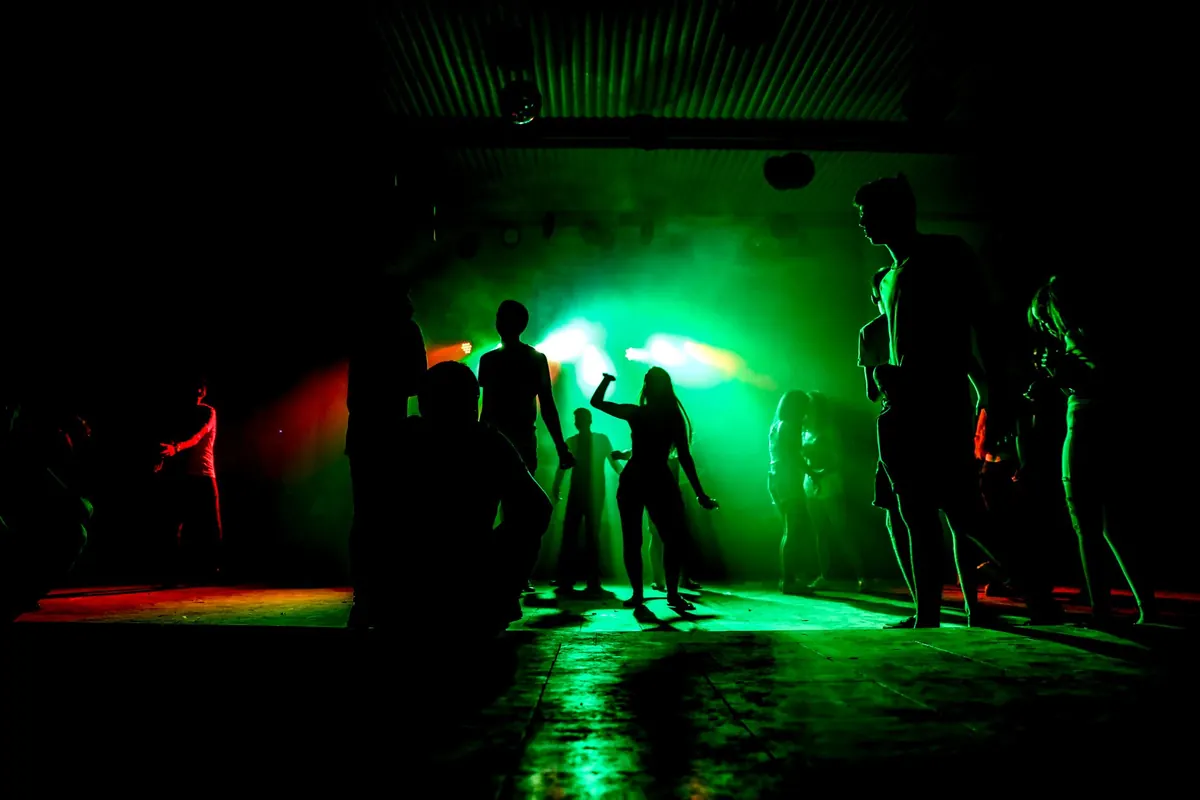
You have a ticket for Velvet Club, you have a rough idea that there will be dancing, and you have a nagging feeling you will not recognise a single record all night. That is more or less the point. House and disco are built for a room rather than a playlist: they work on rhythm, repetition and a vocal hook you can hold on to, and they reward dancers who have never heard the track before.
Two genres, one family tree
Disco came first. Through the mid-1970s it grew out of New York and Philadelphia dancefloors, made by live bands with string sections, horn players and drummers who could hold a steady four-to-the-floor pulse all night. When the major labels moved on, the people who loved those records did not.
House is what happened next. In early-1980s Chicago, DJs and producers began making disco-influenced records on their own, using drum machines and cheap synths instead of a full orchestra. Frankie Knuckles, resident at the Warehouse, is the name most often attached to the sound, and the genre's name is generally traced back to that club. By 1988 the music had crossed the Atlantic and taken hold in Britain. The two have been played side by side ever since.
What disco sounds like
A classic disco record is a song first and a track second. Listen for a steady four-on-the-floor kick drum, played by a human being, with the hi-hat often sitting on the offbeat. The bassline usually does more melodic work than you expect — often more than the vocal. Strings, horns and percussion drift in and out across six or seven minutes, a lead vocal is answered by a chorus of backing singers, and long instrumental passages open the arrangement up so dancers can breathe.
Tempo usually sits between 110 and 130 BPM. Records were extended deliberately so DJs had more to work with; the 12-inch single, with its longer mix, developed for exactly that purpose in the mid-1970s.
What house sounds like
Take the disco template, replace the band with machines, and you have house. The building blocks are consistent: a four-on-the-floor kick from a drum machine (the Roland TR-808 and TR-909 are the two you will hear named most), a handclap or snare on the second and fourth beats, an open hi-hat on the offbeat, a synth bassline that carries the hook, and piano chords or a short vocal phrase used as an instrument rather than a verse.
Tempo tends to land between 118 and 128 BPM. Within that, the flavours differ a lot, and a good DJ moves between them.
The main flavours
- Deep house — slower, warmer, soft chords, vocals pushed back in the mix.
- Vocal or garage house — big soulful singing and swung hi-hats, with New York and New Jersey roots.
- Acid house — the squelching bassline of the Roland TB-303, and the sound of Britain in 1988.
- Tech house and minimal — stripped back, percussion-led, more space between the drums.
How a set moves through the night
Nobody plays the biggest records first. A set is built, and the tempo tells you where you are in it.
The opening hour might sit around 110 to 118 BPM while the room fills: disco, deeper house, longer records, room to talk. The middle section climbs towards 120 to 125, where vocal house and the more obvious classics appear and the floor is at its fullest. The last stretch is the fastest and loosest, sometimes past 130, often with edits, dubs and tracks nobody can name.
This is why a record you know rarely arrives in the form you know. It might be pitched up, looped or played over something else. That is not a DJ being difficult; it is how the music has always worked.
Records you will probably hear
- MFSB — 'Love Is the Message'. The Philadelphia blueprint. If you learn one bassline from this world, learn this one.
- Chic — 'I Want Your Love' or 'Le Freak'. Nile Rodgers guitar, and a chorus built for a full room.
- Donna Summer — 'I Feel Love'. Giorgio Moroder's synth line, and the moment disco imagined the future.
- Sylvester — 'You Make Me Feel (Mighty Real)'. A voice that fills any system.
- Loleatta Holloway — 'Love Sensation'. One of the most re-used vocals in dance music.
- First Choice — 'Let No Man Put Asunder'. The record house DJs keep returning to.
- Frankie Knuckles — 'Your Love'. Chicago, mid-1980s, still devastating on a big system.
- Marshall Jefferson — 'Move Your Body'. Subtitled 'The House Music Anthem', which is fair.
- Mr Fingers — 'Can You Feel It'. Deep house in its purest form.
- Inner City — 'Good Life'. Detroit via Britain, and a singalong if there ever was one.
If you don't know any of it, do this
Pick one element and follow it for a minute: the hi-hat, the bassline, the clap. Counting in fours is genuinely useful — almost everything here is in 4/4, and once you feel where the bar ends, the rest makes sense. Listen for the moment the kick drops out and comes back. It is the oldest trick in the book and it works every time.
Do not Shazam every record. Note two or three you loved and look them up in the morning. Stand a little back from the speakers and away from the walls, where the bass has somewhere to go.
Before you go
- Eat something first, and drink water between drinks.
- Wear shoes you can stand up in for four hours. Not new ones.
- Arrive early enough to catch the warm-up. It is often the best part of the night, and there is space to dance.
- Bring earplugs. Filtered ones let you hear the music properly and protect your hearing; damage picked up on a dancefloor does not come back.
- Agree a meeting point with your mates, watch each other's drinks and pace yourself. If you feel unwell, tell a friend or a member of staff.
- If you like a record, ask someone what it is. Somebody will know.
The music is designed to be danced to by people who have never heard it before. Come in, find your spot, and let the night do the rest.
Photo: Gigxels com / Pexels